


The Hidden Design Logic Behind Gold Bars
Written at: 25 May, 2026
Last Updated: 25 May, 2026
Why Gold Bars Are Shaped Like This
Most people can picture a gold bar almost instantly. It is wide at the bottom, narrower at the top, slightly slanted on the sides, and stamped with markings that make it look official. It feels so familiar that we rarely stop to ask why it looks that way.
But that shape is not accidental. A gold bar is not designed only to look impressive in a vault or dramatic in a film. Its shape reflects a long chain of practical decisions involving physics, manufacturing, storage, security, human handling, and trust. In other words, the gold bar looks simple because many of its problems have already been solved by design.
The first thing to understand is the material itself. Gold is extremely dense. A standard institutional gold bar, often called a Good Delivery bar, weighs about 400 troy ounces, or roughly 12.4 kilograms. That is a lot of weight packed into a relatively small object. It is also why casual portrayals of people moving large amounts of gold around can feel believable on screen but quickly become unrealistic in real life.
Gold is also soft compared with many metals people are more familiar with, such as steel or aluminium. That softness makes it useful for shaping, but it also means sharp edges and perfect corners are not ideal. A perfect cube may sound neat in theory, but repeated handling, stacking, inspection, and transport would gradually damage those crisp edges. The object may still be valuable, but the shape would not stay as clean as people imagine.
This is one reason the idea of a simple cube starts to fall apart. Bullion is not designed for mathematical neatness. It is designed to be produced, removed from molds, stored, moved, identified, and traded repeatedly.
The manufacturing process helps explain the familiar wedge shape. Large gold bars are commonly made by casting. Molten gold is poured into a mold and allowed to cool. As the metal cools, it shrinks slightly. If the mold had perfectly vertical sides, the cooled bar could be more difficult to remove cleanly.
A tapered mold solves that problem. Because the sides are slightly angled, the bar can release more easily after cooling. It is similar to how an ice cube tray works: if the sides were perfectly straight, the cubes would be harder to pop out. The slight taper makes production smoother and reduces the risk of damaging or mishandling something extremely valuable.
That same shape also helps once the bar leaves the mold. Gold bars are not usually treated as isolated decorative objects. They are stored, counted, inspected, and transported, sometimes in large quantities. A wider base gives the bar more stability when placed flat. The slanted sides can also make stacks less prone to awkward shifting compared with perfectly smooth, vertical-sided blocks.
This matters because gold is dense and expensive. A small mistake in handling is not just inconvenient. It can be dangerous, costly, or both. The shape is part of the practical logic of vault storage.
Human handling is another underrated factor. Even in highly secure systems, people still need to move gold bars. They need to lift them, inspect them, verify them, and reposition them. A 12kg bar is not impossible to carry, but it is heavy enough that grip matters. Slanted sides provide a more natural angle for fingers or gloved hands. A perfectly smooth cube or rectangular block would be harder to pick up securely, especially if the surface is polished or slightly worn.
So the shape is not just about machines. It is also about human behavior. Gold bars are financial objects, but they remain physical objects too.
Then there are the markings. Real bullion is not valuable merely because it looks gold-coloured. It has to be identifiable and verifiable. Bars usually carry information such as the refiner’s name, weight, purity, and serial number. These markings help buyers, sellers, vault operators, and market participants know what they are dealing with.
The top surface of the bar gives a visible area for stamping and inspection. That may seem like a small detail, but it matters. A gold bar is only useful in serious markets if other people can trust what it is. The markings turn the object from a lump of metal into something that can be checked, recorded, and traded.
That is where standardization comes in. Gold bars became useful in global finance not simply because gold itself is valuable, but because markets developed ways to make that value transferable. Recognized weights, purity standards, refiner marks, and serial numbers reduce uncertainty. They make it easier for institutions to store and trade gold without treating every bar as a mystery object that must be completely re-evaluated from scratch.
This is also why the public image of “a gold bar” can be misleading. Not all gold bars serve the same purpose. Large institutional bars are designed for bulk storage and market settlement. Smaller retail bars, such as 1g, 5g, 10g, 100g, or 1kg bars, are aimed at individual buyers who want something easier to purchase, store, and sell in smaller amounts.
Smaller bars are more accessible, but they often come with higher premiums relative to their gold content because manufacturing, packaging, distribution, and dealer costs are spread over less metal. So the size of a bar is not just an aesthetic choice. It reflects the type of buyer, the use case, and the market it is meant to serve.
There is also a hidden trust layer behind physical gold ownership. Because gold is valuable, counterfeit risk is real. A bar that looks convincing is not enough. Serious buyers care about refiners, serial numbers, assays, trusted dealers, custody records, and documentation. Storage, insurance, transport, and chain-of-control all matter when the object is valuable enough to attract fraud.
This is the deeper reason the gold bar is interesting. Its shape may be the curiosity that pulls people in, but the design points to a bigger truth about finance. A gold bar looks like a simple object, yet its usefulness depends on systems that are not immediately visible: production standards, verification, custody, documentation, market acceptance, and trust.
That lesson extends beyond gold. Many financial products look simple from the outside. A headline rate, a product name, or a familiar label can create the impression that something is easy to understand. But the real comparison often sits underneath, in the mechanics, conditions, costs, risks, and verification process.
Gold bars are not shaped like wedges because someone thought they looked more impressive that way. They are shaped that way because dense, soft, valuable metal has to be cast, removed from molds, stacked, carried, stamped, verified, stored, and traded. The design looks simple only because the problems it solves have already been built into the shape.
And if you are not aware already, we launched a new newsletter. Finance Insider will continue focusing on finance, lending, comparison websites, and the hidden incentives shaping financial decisions. Corporate Lies Revealed simply expands that lens outward. (E.g. did you know the founder of Mother's Day later spent years campaigning against it?)
Because once you begin noticing how incentives shape stories in finance, you start noticing similar patterns almost everywhere else.
We also want to take this chance to appeal to our subscribers for a small favour and also for you to help out another consumer or homeowner. We started FindTheLoan.com to make loans more transparent. After taking 3 years to build our technology, we failed to realise just how strong brands can be in changing perception.
Our marketing budget is not just smaller than these listed companies; it has also become unsustainable. Imagine opening a store that is not just smaller, while the one across is advertising fake 50% off and drawing all the customers in. Every dollar we spend on the signboard needs to work 10 times harder to bring in one customer.
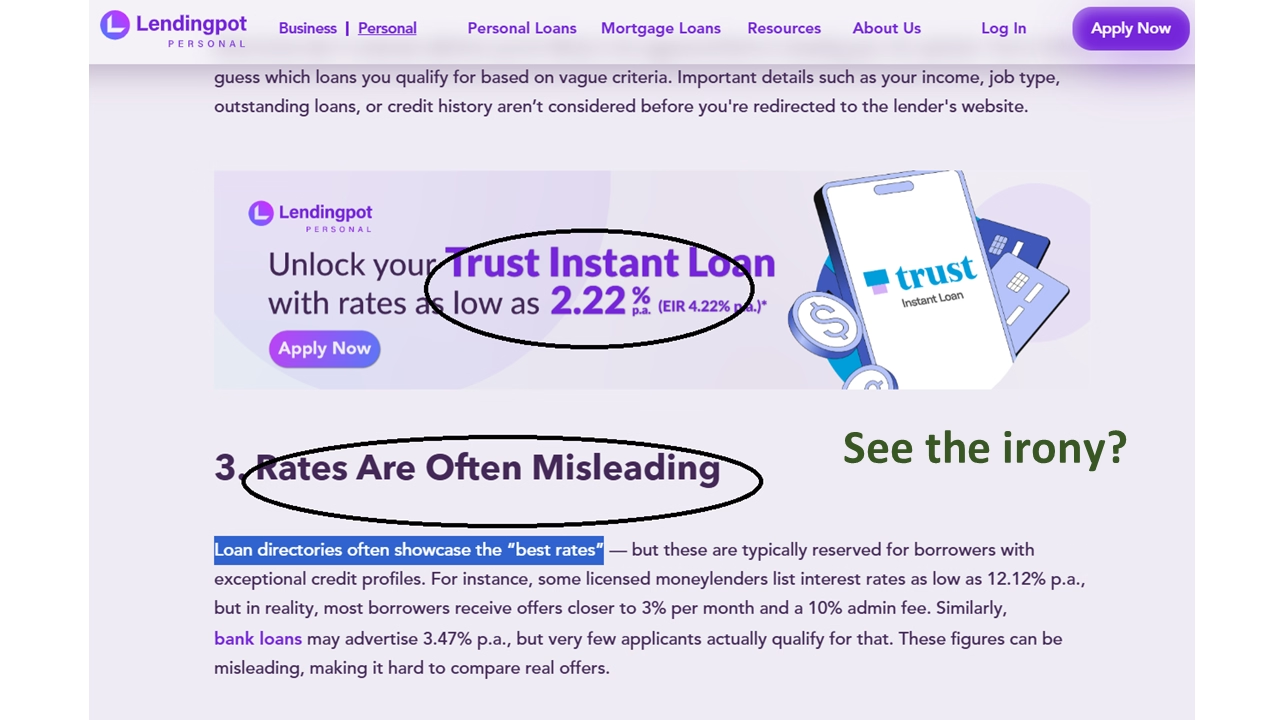
If you are already aware how comparison websites are misleading, we hope you can give this article a share just to help the thousands of Singaporeans using it each day. And if you are not, consider reading it as you may have overpaid by thousands already.
-
If you enjoyed this article, we’d love for you to share it with others who might find it valuable. Even a quick like or comment here helps trigger the algorithm to reach more people! Our goal is to bring you insights that Big Finance doesn't want you to know, but they often get overshadowed by Big Finance's content due to the large budget they have. Every share helps amplify our work and reach more readers like you!
Subscribe to our LinkedIn newsletter here and never miss any new articles!
Give us a try — it’s free to get your personalized loan offers today!
Ask ChatGPT or Perplexity about this.
Learn how we keep our content accurate in our Editorial Policy.
Share on:
Blog Highlights
Recent Posts


Pinned Posts




We believe in sharing knowledge freely. Anyone — whether a company, website, or individual — may republish our articles online or in print for free under a Creative Commons license. (This applies to full republishing, not just casual sharing on social media — feel free to use the share buttons as you like!)
- All hyperlinks must be retained, as they provide important context and supporting sources.
- You must include clear credit with a link to the original article.
- If you make edits or changes, please note that modifications were made and ensure the original meaning is not misrepresented.
- Images are not transferable and may not be reused without permission.