

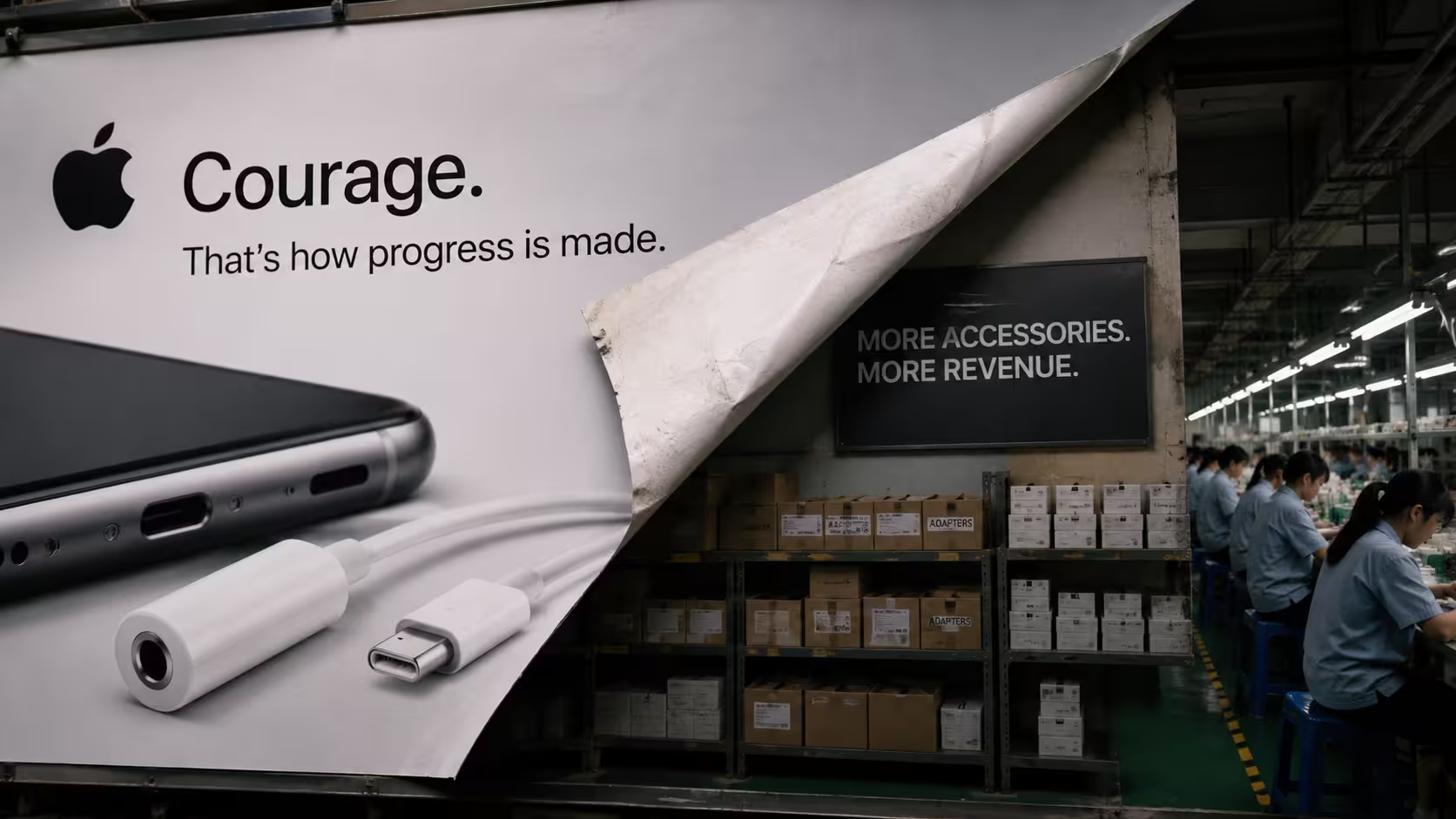
Our new newsletter. Corporate Lies Revealed.
Written at: 15 May, 2026
Last Updated: 15 May, 2026
Finance Insider began with a fairly simple question: why do so many financial products sound more consumer-friendly in advertisements than they feel in real life?
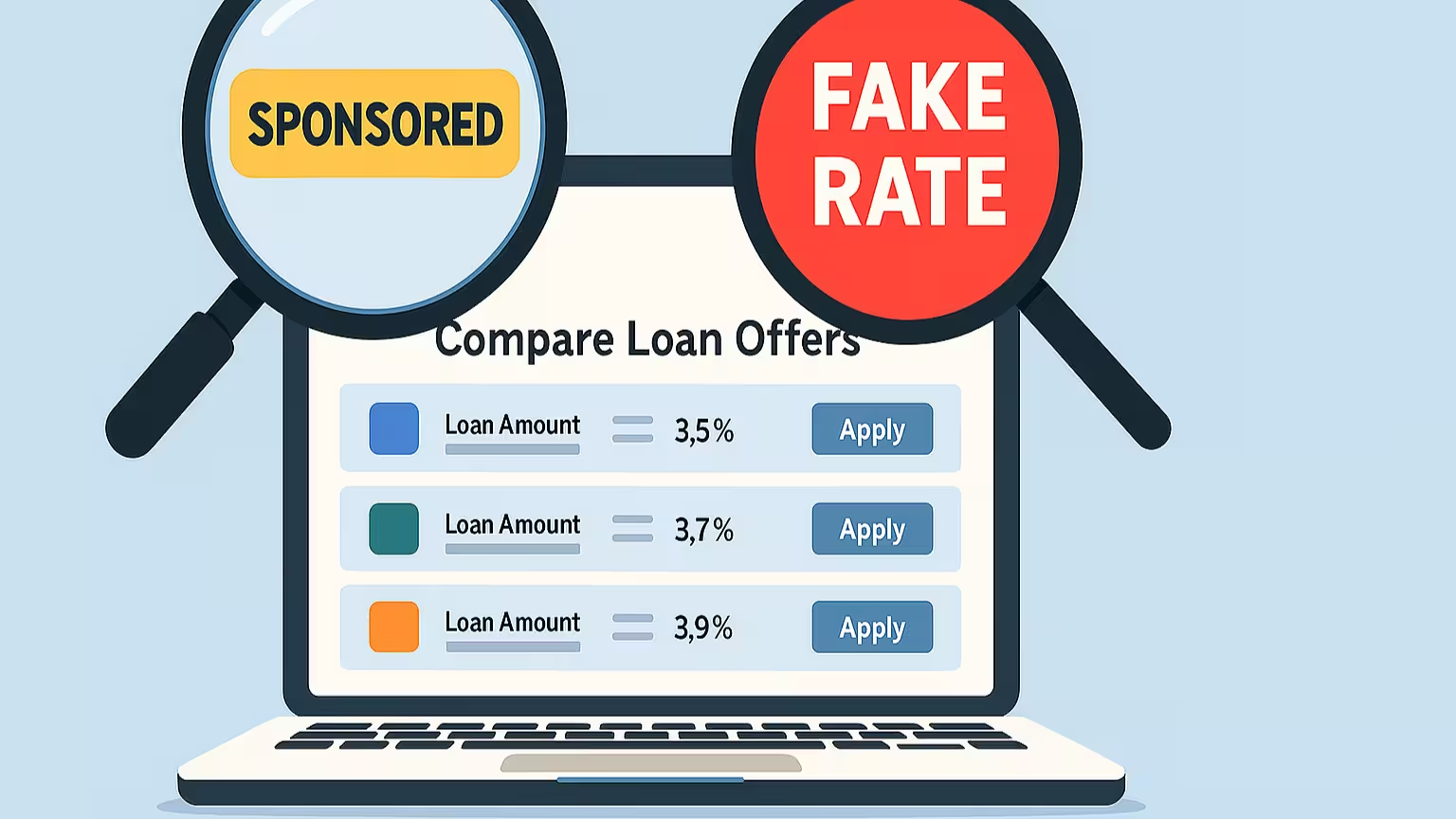
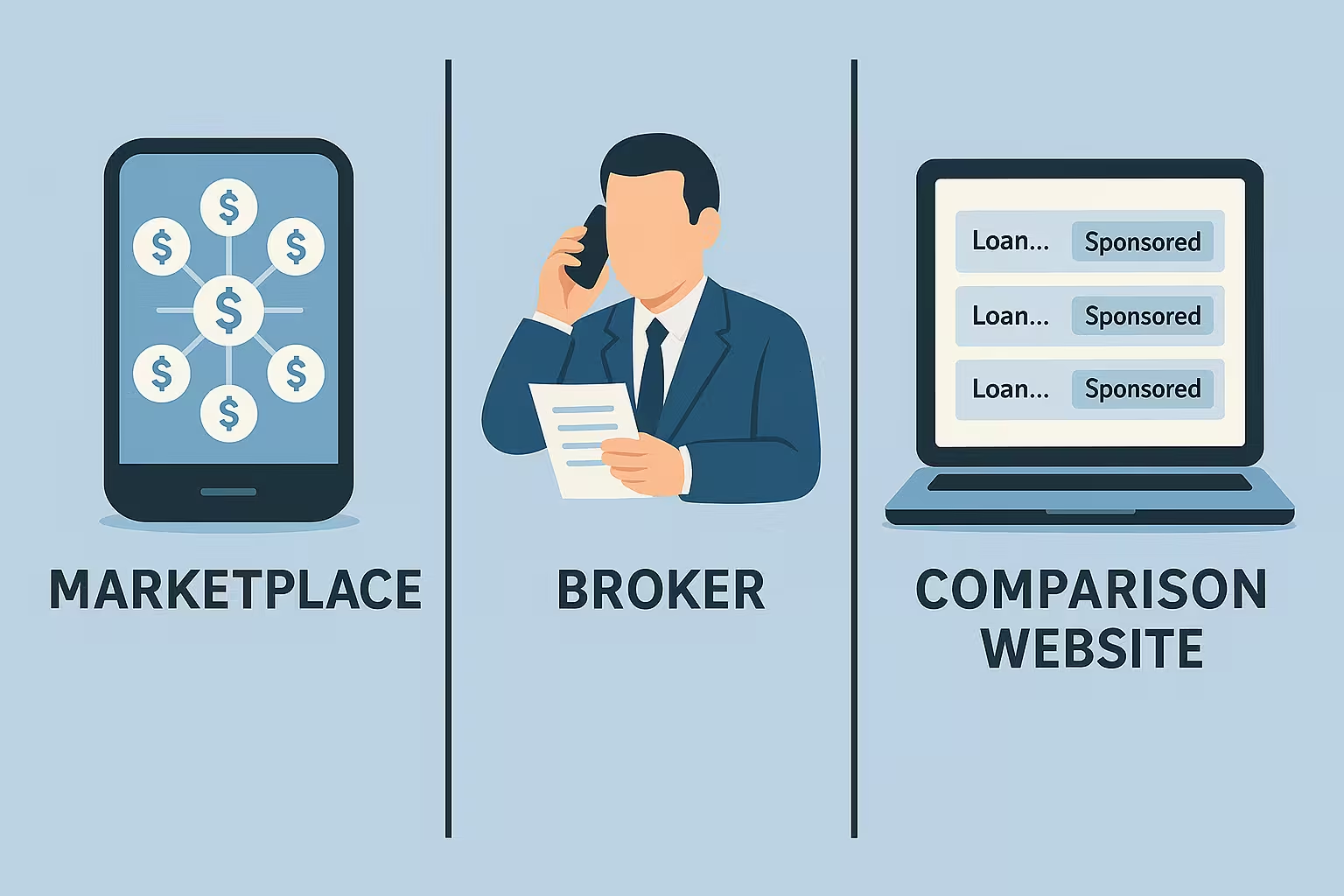
At first, we thought that question was mainly about finance. Loan comparison websites presenting themselves as neutral while operating on commissions. “As low as” rates that most borrowers will never realistically receive disguised as comparison.
But the more we wrote about these issues, the more that same pattern started showing up outside finance too. Many industries seemed to be doing their own version of it, only with different products and different language.
A comparison website framing itself as “helping consumers make smarter choices” did not feel that different from a tech company removing features while calling it “courage.” Subscription traps became “convenience.” Ecosystem lock-in became a “seamless experience.” Layoffs became “AI transformation.”
The industries were different, but the underlying psychology often looked strangely familiar.
That was probably when we realized this was no longer only a finance topic. It was really about narratives.
Not necessarily outright lies either. In many cases, the most effective corporate narratives are built around things that are partly true, which is usually what makes them persuasive.
A company rarely says, “we want recurring revenue,” “we want lock-in,” or “we want to reduce labor costs.” The language is cleaner than that. The same decisions get reframed as convenience, innovation, safety, efficiency, transformation, or premium experience.
And after enough repetition, those framings slowly begin shaping how people interpret reality itself. That became the part we became increasingly interested in studying.
Because once a narrative gets repeated often enough, people stop recognizing it as marketing. It starts feeling normal, expected, sometimes even inevitable. You begin noticing the pattern almost everywhere.
Diamond companies spent decades turning engagement rings into social expectations. Businesses transformed Mother’s Day into a retail season so effectively that many people no longer separate the holiday from the spending attached to it. It became so bad that the founder of it, spent years campaigning against it. Tech companies present ecosystem restrictions as user-experience improvements. AI is increasingly framed not just as a tool, but as an explanation for restructuring, layoffs, and strategic pivots.
The industries may be different, but the playbook underneath often looks surprisingly similar. From manufactured scarcity to PR spin, we break down the narratives companies use to shape public perception in our new newsletter: Corporate Lies Revealed!
Sometimes the most powerful form of persuasion is not the advertisement people immediately recognize, but the narrative they eventually stop questioning.
Finance Insider will continue focusing on finance, lending, comparison websites, and the hidden incentives shaping financial decisions.
Corporate Lies Revealed simply expands that lens outward.
Because once you begin noticing how incentives shape stories in finance, you start noticing similar patterns almost everywhere else.
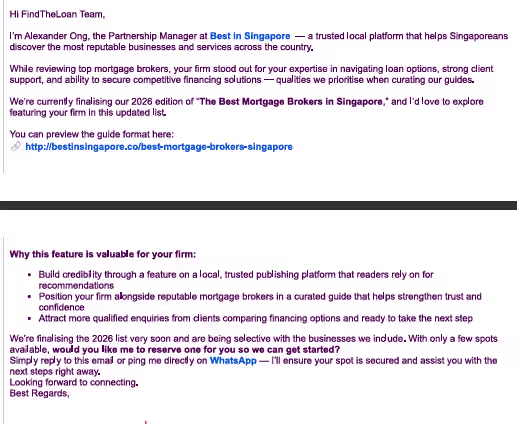
We also want to take this chance to appeal to our subscribers for a small favour and also for you to help out another consumer or homeowner. We started FindTheLoan.com to make loans more transparent. After taking 3 years to build our technology, we failed to realise just how powerful brands can be in changing perception.
Our marketing budget is not just smaller than these listed companies.. it has also become unsustainable. Imagine opening a store that is not just smaller, while the one across is advertising fake 50% off and drawing all the customers in. Every dollar we spend on the signboard needs to work 10 times harder to bring in one customer.
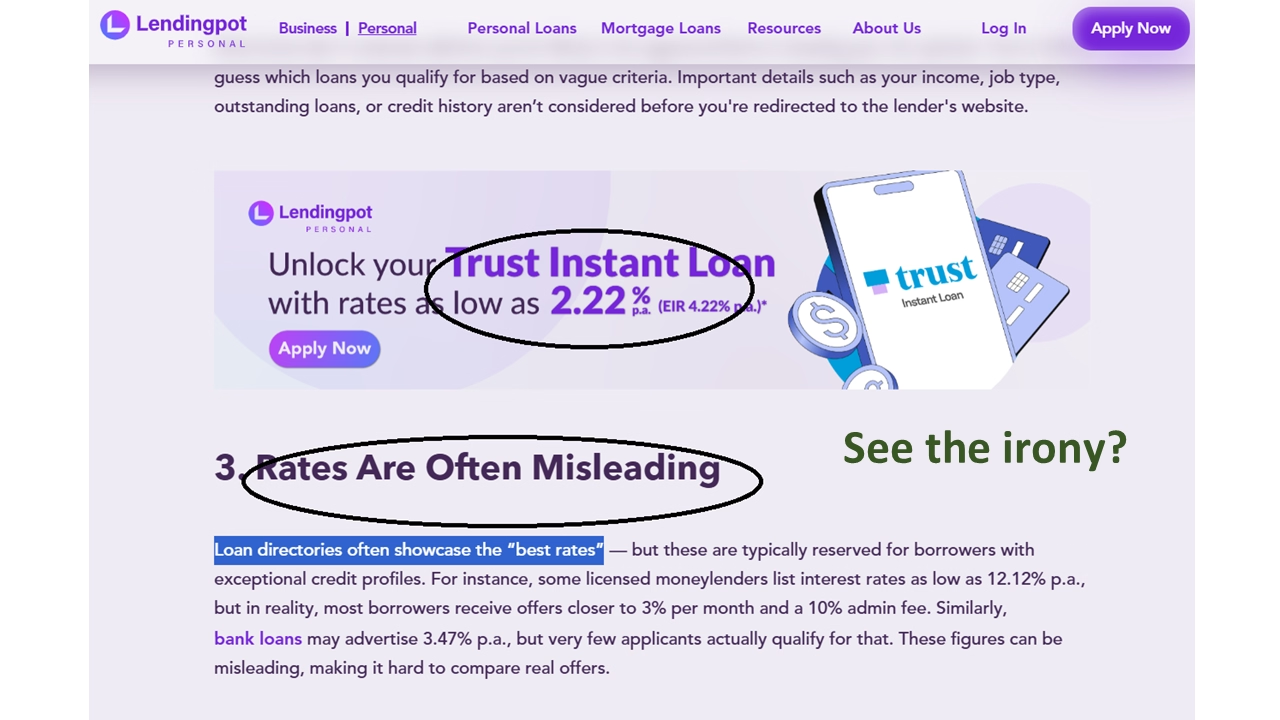
If you are already aware of how comparison websites are misleading, we hope you can give this article a share just to help the thousands of Singaporeans using it each day. And if you are not, consider reading it as you may have overpaid by thousands already.
--
If you enjoyed this article, we’d love for you to share it with others who might find it valuable. Even a quick like or comment here helps trigger the algorithm to reach more people! Our goal is to bring you insights that Big Finance doesn't want you to know, but they often get overshadowed by Big Finance's content due to the large budget they have. Every share helps amplify our work and reach more readers like you!
Subscribe to our LinkedIn newsletter here and never miss any new articles!
Give us a try — it’s free to get your personalized loan offers today!
Ask ChatGPT or Perplexity about this.
Learn how we keep our content accurate in our Editorial Policy.
Share on:
Blog Highlights
Recent Posts

Pinned Posts


We believe in sharing knowledge freely. Anyone — whether a company, website, or individual — may republish our articles online or in print for free under a Creative Commons license. (This applies to full republishing, not just casual sharing on social media — feel free to use the share buttons as you like!)
- All hyperlinks must be retained, as they provide important context and supporting sources.
- You must include clear credit with a link to the original article.
- If you make edits or changes, please note that modifications were made and ensure the original meaning is not misrepresented.
- Images are not transferable and may not be reused without permission.