

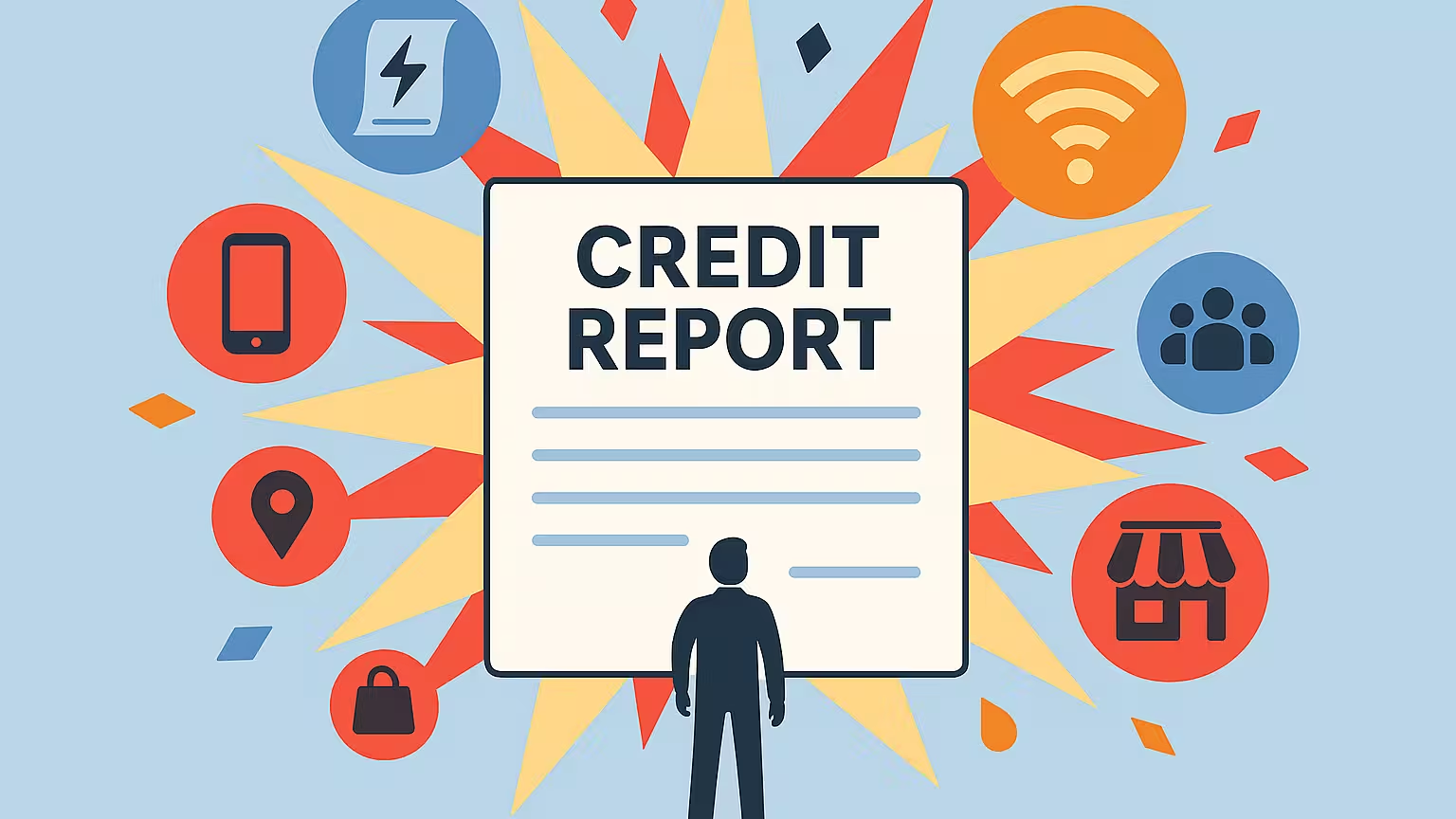
Innovation in alternative credit data & AI credit scoring is a double-edged sword for borrowers
Add FindTheLoan as a preferred source, and Google, when searching, will include our website in its search.
Written at: 03 Feb, 2025
Last Updated: 26 Sep, 2025
Dynamic pricing has been a controversial practice as it raises ethical questions about fairness and transparency.
Instead of prices fluctuating due to supply and demand, e-commerce and hotel booking websites have been subjected to scrutiny; prices may vary based on a user's browsing behaviour, location, and potentially their perceived willingness to pay, and different users are charged differently.
This practice involves analyzing data such as:
- Browsing History: Websites may track which products or services you've looked at, allowing them to adjust prices based on perceived interest.
- Location Data: Users from wealthier regions may see higher prices compared to those from less affluent areas.
- Device Used: Some reports suggest that users on mobile devices may be charged different prices compared to those on desktop computers.
- Cookies and Tracking: Sites may use cookies to identify returning visitors and adjust prices based on their previous interactions.
As regulators focus on ensuring that AI credit scoring does not result in racial profiling, where individuals from historically disadvantaged groups are not unfairly penalized or charged more due to their race, which may not accurately reflect their creditworthiness, such efforts are mainly to develop guidelines, and most lenders are not explicitly forbidden from deciding on the vendor of their choice.
Such efforts, even when observed, can be negated as lenders, increasingly rely on alternative credit data to
1)gain an edge over their competition and be more competitive in their pricing to borrowers. However, when inaccurate data are used, the reverse can happen and borrowers can be charged more than if alternative data had not been used.
2)to serve the underserved, where there are lack of accurate ways to score them effectively -where the maturity of the lending ecosystem or credit bureaus is unable to give them a comprehensive view of the borrower's creditworthiness or repayment behaviour.
In Singapore, members of the credit bureau are still predominantly the banks, while there are many more non-bank players that smaller or "weaker" SMEs also rely heavily on. This may prompt local lenders, because of the incomplete picture, to increase their weightage of assessment by using alternative credit data too. Some fintech lenders have even raised millions, touting their proprietary credit scoring and alternative data collection while some lenders have asked if we can provide alternative credit data which is not our business model.
While Google has now explicitly forbidden Chrome extension developers from selling users' data to data brokers or other information resellers for credit creditworthiness/lending qualification purposes, there are no checks to see if the developers are doing so.
Many websites can also do it since Southeast Asia's equivalent of GDPR or PDPA is generally reactive (if there is even a robust one), meaning years of data can be collected and circulated already.
To make matters worse, alternative credit data providers have nowhere near the collection means of credit bureaus (which, to begin with, can be highly inaccurate, with 44% of Americans finding errors in their credit reports).
They often have to trade data with one another when one has a stronger subset of data than the others, in order to provide lenders with a more complete data set. It becomes a circular loop where any biases and inaccuracies can be amplified.
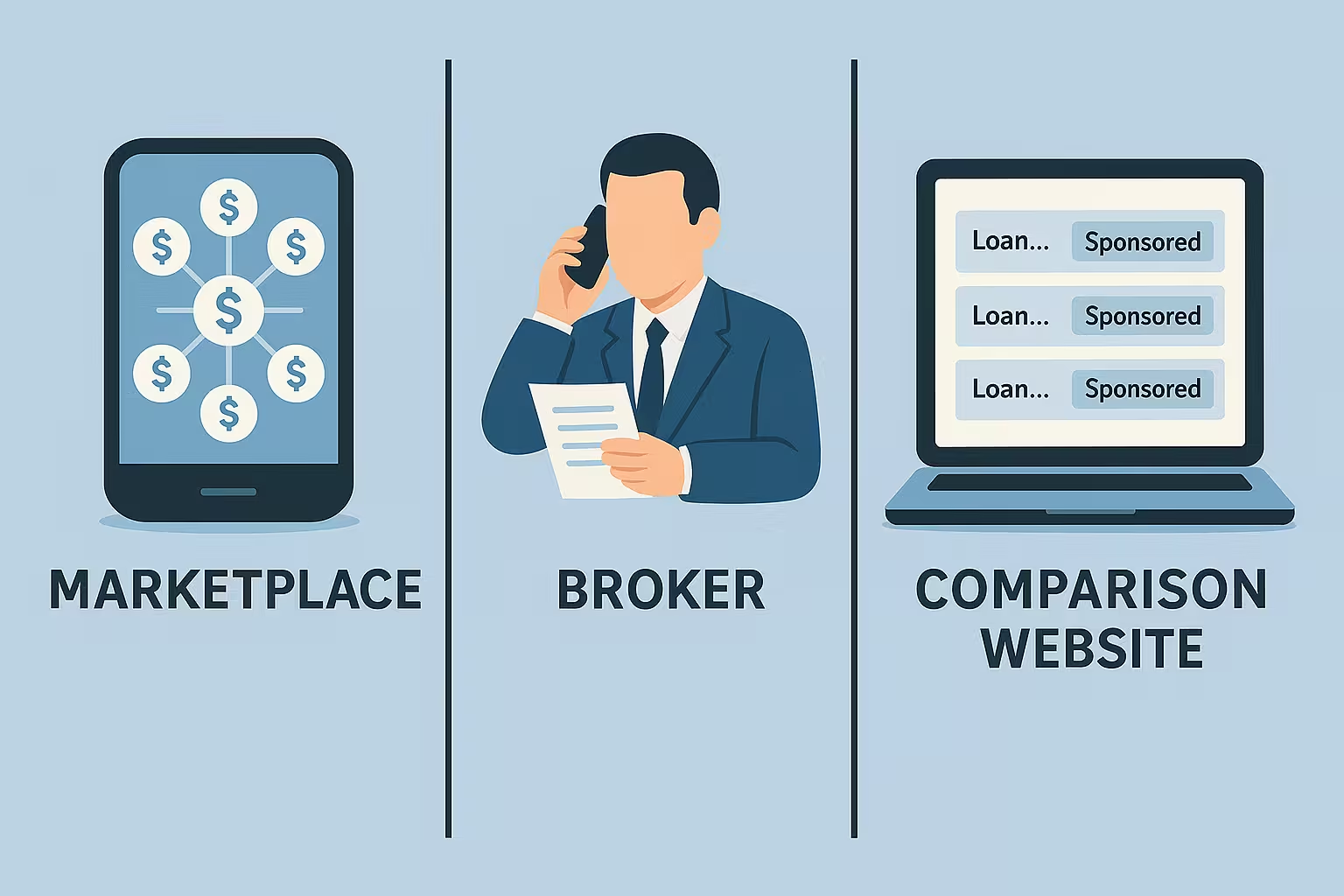
As a digital loan marketplace, where we are the first in Singapore that is digitalized end-to-end without a human, to eliminate the biases of loan brokers and their conflicts of interest, the use of alternative data by lenders is still something we or any intermediaries are unable to influence.
As we advocate for transparent borrowing and ethical practices, we invite regulators and industry stakeholders to not just look at AI scoring but also how to leverage alternative data responsibly to ensure a more equitable financial ecosystem for all.
--
If you enjoyed this article, we’d love for you to share it with others who might find it valuable. Even a quick like or comment here helps trigger the algorithm to reach more people! Our goal is to bring you insights that Big Finance doesn't want you to know, but they often get overshadowed by Big Finance's content due to the large budget they have. Every share helps amplify our work and reach more readers like you!
Subscribe to our LinkedIn newsletter here or on Medium here and never miss any new articles!
Give us a try — it’s free to get your personalized loan offers today!
Ask ChatGPT or Perplexity about this.
Learn how we keep our content accurate in our Editorial Policy.
Share on:
Blog Highlights
Recent Posts


Pinned Posts


We believe in sharing knowledge freely. Anyone — whether a company, website, or individual — may republish our articles online or in print for free under a Creative Commons license. (This applies to full republishing, not just casual sharing on social media — feel free to use the share buttons as you like!)
- All hyperlinks must be retained, as they provide important context and supporting sources.
- You must include clear credit with a link to the original article.
- If you make edits or changes, please note that modifications were made and ensure the original meaning is not misrepresented.
- Images are not transferable and may not be reused without permission.